


Product Features
Uniform Airflow Distribution: Optimized internal airflow structure ensures even diffusion of intake air into the adsorbent bed, minimizing localized impact and reducing adsorbent attrition/pulverization, thereby significantly extending adsorbent service life.
Premium Molecular Sieve Selection: Partnering with renowned domestic and international carbon molecular sieve manufacturers, we select the most energy-efficient and high-performance sieve grades tailored to specific operating conditions, ensuring an optimal balance between oxygen quality and energy consumption.
Reliable Air Source Treatment: Equipped with high-quality air treatment components to effectively remove oil, water, and dust, ensuring stable, continuous 24-hour operation and a service life of at least five years.
High-Density Filling: Integrates three processes-automatic vacuum loading, "snowstorm" filling, and vibration compaction-to ensure uniform and dense packing; this increases the filling weight by over 10% for the same volume, resulting in superior long-term operational reliability.
Siemens PLC Control: Fully automated control with one-touch startup eliminates the need for dedicated personnel on-site; includes a remote communication interface for real-time monitoring of operating status via PC or smartphone.
Automatic Compaction: Features a spring or pneumatic cylinder compaction mechanism that automatically compensates for molecular sieve settling, effectively preventing pulverization and further extending service life.
Substandard Gas Venting: Equipped with an automatic venting system (manual option available) to discharge nitrogen that fails to meet purity standards during startup or when purity levels are insufficient, guaranteeing the quality of the output oxygen.
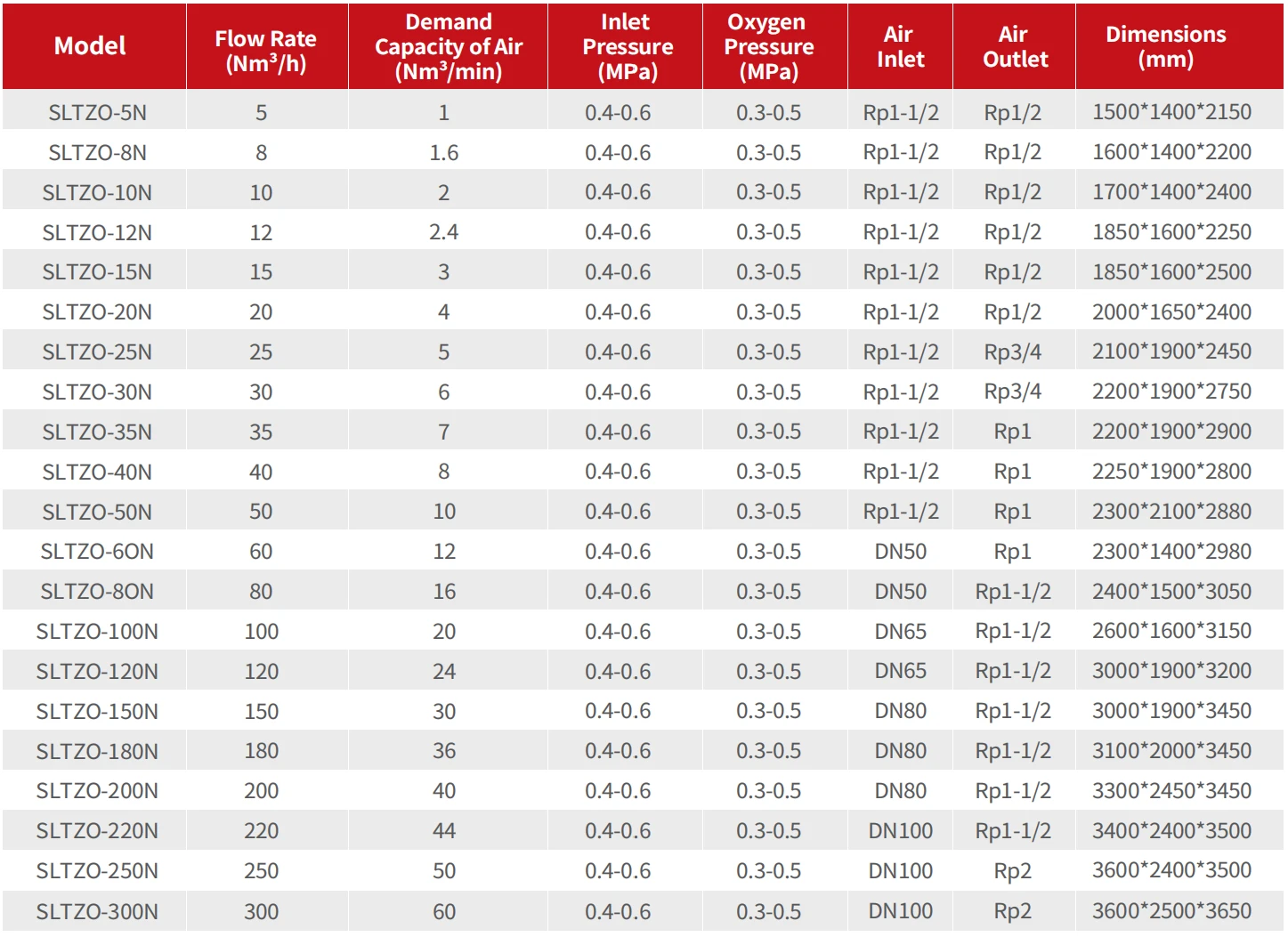
Technical Specifications of the Twin Tower Oxygen Generator
Application Scenarios
With a wide flow rate range and adjustable purity, the dual-tower oxygen generator is suitable for the following typical scenarios:
Oxygen-enriched combustion support
Enhances combustion efficiency and reduces energy consumption in industrial furnaces and kilns-such as glass melting furnaces, cement rotary kilns, ceramic kilns, and waste incinerators-by supplying oxygen-enriched air.
Ozone generation feed gas
Supplies high-concentration oxygen-enriched gas to ozone generators, boosting ozone production efficiency.
Aquaculture oxygenation
Delivers high-volume oxygen flow to meet the continuous oxygenation needs of high-density, industrial-scale aquaculture facilities.
Wastewater treatment aeration
Replaces traditional blower aeration to improve biochemical reaction efficiency and reduce electricity consumption during operation.
Centralized medical oxygen supply
Serves as the central oxygen supply system for small-to-medium-sized hospitals, health centers, rehabilitation facilities, and similar institutions.
Non-ferrous metal smelting
Supports oxygen-enriched smelting processes to raise smelting temperatures and shorten smelting times.
Twin Tower Oxygen Generation Plant FAQ
Q1: What is the service life of the adsorbent in a twin-tower oxygen generator?
Provided that the feed gas meets quality standards and proper operating and maintenance procedures are followed, the carbon molecular sieve typically has a service life of at least five years. The equipment features an automatic compression mechanism that compensates for minor settling of the molecular sieve and effectively prevents pulverization-a key factor in extending its lifespan. Additionally, an optimized airflow distribution structure minimizes abrasive wear caused by airflow impact, further extending the interval between adsorbent replacements.
Q2: How do I choose between a twin-tower oxygen generator and a modular oxygen generator?
The choice depends primarily on oxygen output requirements and installation conditions. Twin-tower systems cover a wide flow range (5–300+ Nm³/h), offering distinct advantages for medium-to-high flow applications and superior pressure-bearing capabilities. Modular systems feature a compact design with a small footprint and-since they are not classified as pressure vessels-do not require annual inspections; they are ideal for low-to-medium flow applications (1–50 Nm³/h) where installation space is limited. Specific model selection requires a comprehensive assessment of oxygen output, purity, and site conditions; our technical team can provide free recommendations.
Q3: Is the equipment's power consumption high?
The power consumption of the oxygen generator unit itself-primarily for the PLC control system and pneumatic valves-is usually ≤1.5 kW, representing a very small fraction of the system's total energy use. The system's overall power consumption is largely determined by the upstream air compressor. By precisely selecting the molecular sieve and optimizing the adsorption process, we minimize compressed air consumption, thereby indirectly reducing the air compressor's load and helping customers save on total electricity costs.
Q4: Why is a compression mechanism installed on the adsorption towers?
During long-term operation, molecular sieves can undergo slight pulverization and volumetric shrinkage due to factors such as airflow impact, temperature fluctuations, and mechanical vibration. Without timely compression, the sieve bed may loosen and develop gaps; this allows the sieve material to shift and rub against itself, accelerating pulverization. Furthermore, airflow may "short-circuit" through these gaps, leading to a significant drop in adsorption efficiency and fluctuations in purity. The automatic compression mechanism continuously applies pressure to compensate for settling, ensuring the sieve bed remains compact and preventing these issues.
Hot Tags: twin tower oxygen generator, China twin tower oxygen generator manufacturers, suppliers, factory, modular onsite oxygen plant, modular oxygen gas generator, molecular sieve oxygen generation system, oxygen generator air separation, oxygen generator control cabinet, PSA oxygen generation unit