

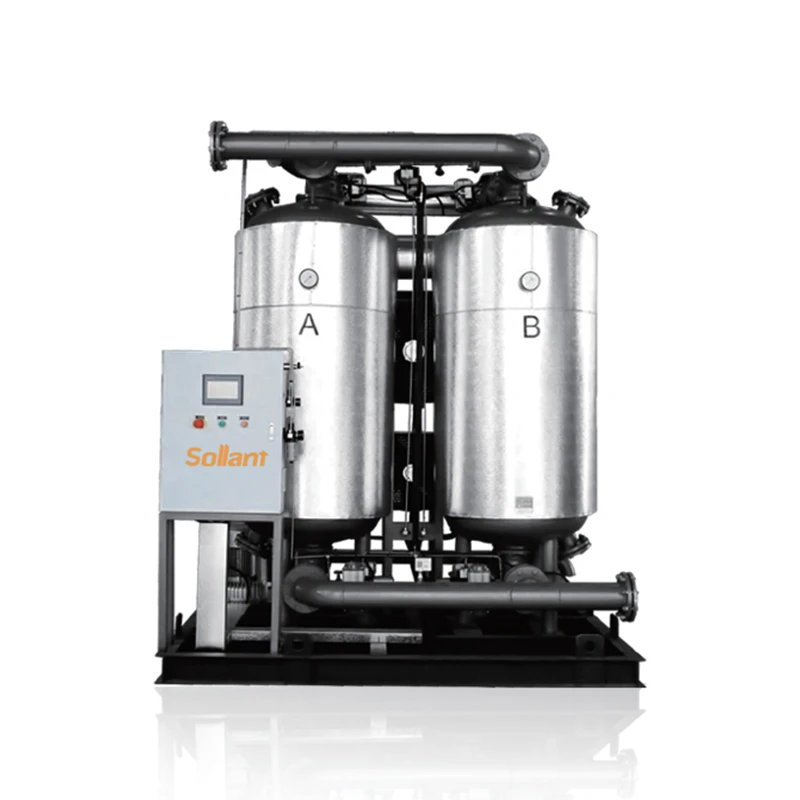
Product Overview
This product is a zero loss blower heat adsorption air dryer. It utilizes a blower to draw in ambient air, which is then heated to regenerate the adsorbent; this replaces the traditional method of using dried compressed air as the purge gas, thereby drastically reducing purge air consumption. Integrating high-efficiency adsorbent, an intelligent control system, and patented cooling technology, the unit delivers significant energy savings while maintaining a stable, low dew point. It is ideally suited for industrial applications that demand both low operating costs and consistent dew point stability.
Key Features
High-Efficiency Adsorbent
Developed in collaboration with upstream suppliers, the high-performance adsorbent features a specific surface area of up to 350 m²/g and excellent adsorption kinetics, ensuring a stable and reliable outlet dew point.
Vacuum Loading Process
The adsorbent is loaded using a vacuum process, resulting in a dense, compact bed with strong inter-particle bonding; this minimizes pulverization and effectively extends the adsorbent's service life.
Intelligent Energy-Saving Control
Equipped with a PLC controller supporting real-time monitoring and data logging, the system integrates timing-based, load-tracking, and dew-point-based control modes to enable on-demand regeneration and highly energy-efficient operation.
Patented Cooling System
Features a patented zero-loss blower-assisted cooling system; following the regeneration heating phase, blower cooling rapidly lowers the adsorbent bed temperature, preventing dew point drift during the switch back to the adsorption cycle and ensuring consistent output dew point stability.
Smart IoT Capabilities
Equipped with IoT connectivity, the system supports remote monitoring and control, centralized management of multiple units, intelligent analysis of operational data, and predictive fault warnings, helping users optimize equipment operation and maintenance strategies.
Operating Principle Overview
This unit utilizes two adsorption towers that operate alternately. While one tower is in the adsorption phase, moisture in the compressed air is captured by the adsorbent, yielding dry output gas; simultaneously, the regeneration tower uses a blower to draw in ambient air, which is heated to regenerate the adsorbent and drive off the captured moisture. Following regeneration, the bed temperature is lowered to near-ambient levels via blower cooling before the unit switches back to the adsorption mode. Continuous and stable dry air supply is achieved through the periodic switching of the two towers.
Comparison of Technical Advantages
|
Comparison Item |
Traditional Heatless/Heat Regeneration |
Blower-Assisted Heat Regeneration |
|
Regeneration gas source |
Dry compressed air |
Ambient air (blower intake) |
|
Regeneration gas consumption |
5%–15% of process gas flow |
Near zero (consumes only a small amount of instrument air) |
|
Energy Consumption Breakdown |
Compressed air waste + Heater (heated purge) |
Blower + Heater (electrical energy) |
|
Control Method |
Primarily time-based control |
Multi-factor intelligent control (time + load + dew point) |
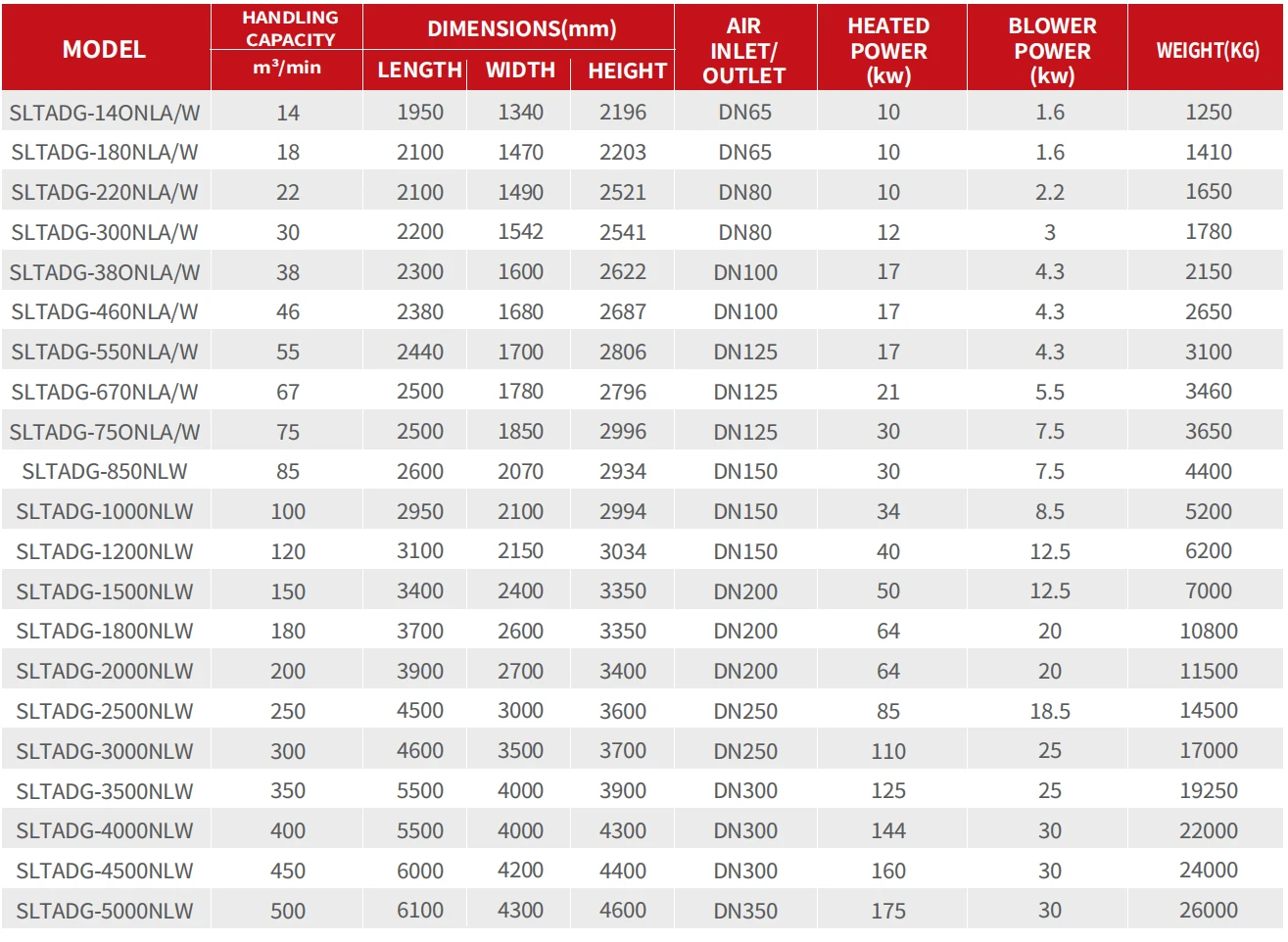
Technical specifications of the zero loss blower desiccant air dryer
FAQs for Zero Loss Blower Heat Adsorption Air Dryers
Q1: Do "zero-loss" models truly consume no compressed air at all?
During the heating phase of regeneration, they indeed do not consume processed air; instead, a blower draws in ambient air, heats it, and delivers it to the regeneration tower. However, designs differ among manufacturers regarding the cooling phase:
Zero-purge models: Utilize a closed-loop cooling cycle where the cooling air circulates within the system and is reused, resulting in no discharge of processed air.
Low-purge models: Still consume approximately 2%–3% of processed air during the cooling phase.
Therefore, "zero-purge" in the true sense means no processed compressed air is vented to the atmosphere throughout the entire regeneration process.
Q2: Does the adsorbent need to be replaced periodically?
Yes. Adsorbents (such as activated alumina or molecular sieves) have a finite service life. It is generally recommended to inspect and consider replacement every 10,000 hours or every two years. Immediate replacement is required if the dew point remains consistently high, or if sampling reveals that the adsorbent has fractured, turned to powder, or become contaminated with oil. When replacing the adsorbent, it is also recommended to replace the dew point indicator and sealing O-rings.
Q3: What are the key considerations for maintenance?
No lubrication: The use of any lubricants within the dryer system is strictly prohibited to prevent contamination of the adsorbent and valves.
Valve maintenance: Pneumatic valves, exhaust valves, and check valves should be inspected quarterly; worn valve seats and seals should be cleaned or replaced, as this is crucial for maintaining equipment performance.
Instrument calibration: If the unit is equipped with online monitoring instruments (such as a dew point meter), regular calibration is required to ensure reading accuracy and correctly assess the equipment's operating status.
Q4: Which is more energy-efficient: a zero loss blower adsorption dryer or a compression heat desiccant air dryer?
If there is sufficient waste heat from the air compressor discharge (typically requiring ≥120°C), the heat-of-compression dryer is more energy-efficient; it utilizes the compressor's waste heat for regeneration, requiring almost no electricity for heating elements, and offers superior overall energy savings compared to blower-purge models. However, if there is no suitable waste heat source, or if the air compressor is an oil-injected screw type (where discharge temperatures are insufficient), the blower-purge model is the better choice.
Q5: Are there any specific requirements for the installation of zero-loss heat adsorption air dryers using a blower?
There are four main points to consider:
- Environmental ventilation: Since the blower draws in ambient air, the installation site must be well-ventilated and free from excessive concentrations of dust or corrosive gases.
- Level foundation: The equipment is heavy; a concrete foundation is required, or the floor must have sufficient load-bearing capacity.
- Inlet piping: A high-efficiency oil-removal filter (residual oil content ≤0.01 ppm) must be installed upstream of the inlet; otherwise, the adsorbent may suffer from "oil poisoning" and lose its effectiveness.
- Exhaust piping: The regeneration exhaust outlet must be vented outdoors to prevent hot, humid air from being discharged into the equipment room, which would raise the ambient temperature and humidity.
Hot Tags: zero loss blower heat desiccant air dryer, China zero loss blower heat desiccant air dryer manufacturers, suppliers, factory, heated twin tower adsorption dryer, heatless twin tower absorption dryer, micro loss blower heat desiccant type dryer, rotary drum adsorption dryer, rotary drum desiccant air dryer for air compressor, vacuum assisted modular desiccant type dryer